
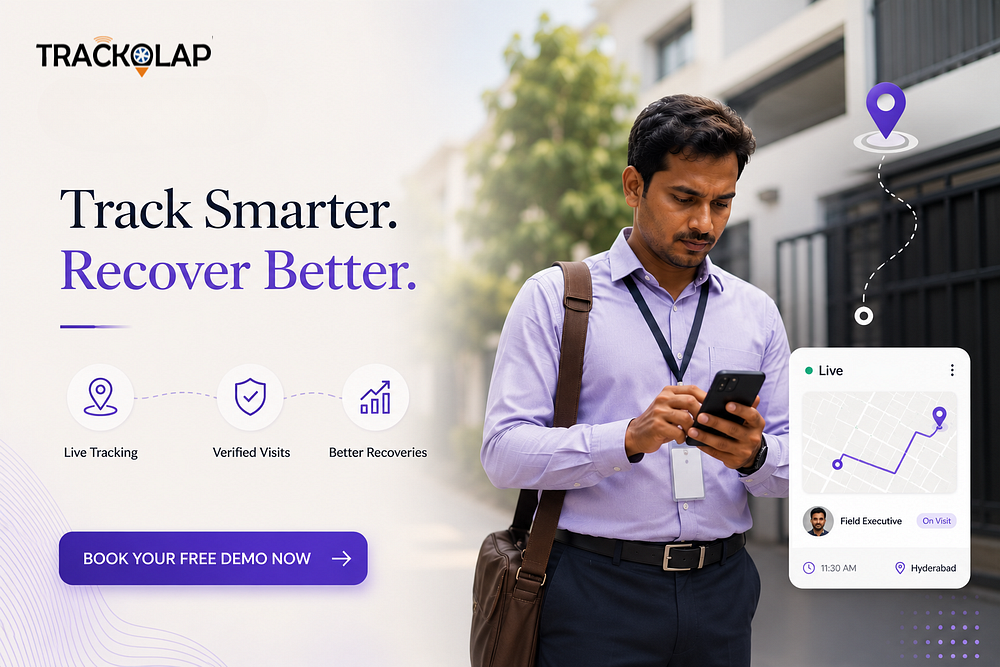
Field visits are not only a working activity in the NBFC ecosystem, but also have a direct impact on recovery performance. It could be loan follow-ups, borrower verification, or overdue collection, but the success of such visits depends on the speed of collecting payments and their efficiency.
However, many companies have an unexpected gap. Recovery rates are generally uneven, despite an increase in field visits. It brings a crucial question: Is it really the issue of effort or visibility?
The solution to these visits is in the effectiveness of monitoring, validation, and optimization of visits. Without employee live tracking software, field operations seem to be guesses and not quantifiable measures, thus resulting in missed opportunities and a lack of control.
Why Traditional Field Visits Fail Without Employee Live Tracking
Traditional field visit systems in NBFCs are often based on manual coordination and delayed reporting. It creates a gap between actual field activities and what gets officially recorded. Managers rely on reports that are not necessarily real-time, and it is hard to determine whether they were effective in visits or if they were only considered as having been done. The decision-making process is not impacted by this invisibility, especially when it comes to recovery situations that require prompt action.
- No real-time visibility
- Delayed reporting updates
- Unverified field visits
- Inefficient route planning
- Limited accountability
Therefore, recovery teams are performing with incomplete information, which results in missed chances and unsteady performance. Lack of employee live tracking means that field operations are reactive instead of proactive, so that the overall impact of each visit is diminished.
The Impact of Poor Visibility on Recovery Rates
If visibility is minimal, recovery performance is impaired in various aspects. The most immediate and first effect is missed visits. Collection cycles can be greatly impacted by even a small percentage of unverified or missing visits.
Secondly, accountability is lacking. Without appropriate tracking, it is hard to distinguish productive and non-productive field efforts. It affects not just individual performance but also the overall trend of team discipline.
Another significant issue is time inefficiency. Poor route planning tends to make field agents spend more time on the road than interacting with borrowers. It causes the effective number of interactions in a day to be less.
Employee live tracking software is essential as it guarantees that all movements, visits, and interactions are documented and can be verified. It brings clarity to operations that were previously unclear.
How Employee Live Tracking Software Improves Field Visit and Recovery Performance
Enhancing recovery outcomes is not a matter of paying more visits to the field but ensuring all visits are worthwhile. NBFCs require the visibility of their field teams, organization, and regulation to see that the efforts of this process turn into real collections. Here, employee live tracking software shifts unstructured implementation to quantifiable performance.
- Real-Time Visibility: Managers can follow agent movements in real-time and ensure that planned visits are implemented without postponements and deviations.
- Verified Field Visits: Geo-tagged visits are verified, and this removes false reporting and enhances accountability.
- Optimized Route Planning: The agents use planned routes, and less time is spent on traveling; more time is spent interacting with the borrowers.
- Connected Field Operations: With field sales automation, the visits can be aligned with tasks, follow-ups, and recovery processes.
- Performance Monitoring: Managers can assess the productivity of agents in real time, which enhances decision-making and team performance.
Through these capabilities, NBFCs can turn field activities into high-impact, trackable, and consistent recovery efforts.
From Field Data to Recovery Strategy Using Employee Live Tracking
Field visits have a huge amount of data; however, unless one has sufficient systems to store and retrieve the data, the data might be wasted. The true worth is to turn this information into practical insights.
Employee live tracking enables NBFCs to discover trends like missed visits, risky borrower areas, and low recovery areas. These lessons help groups in modifying approaches.
For example, if some locations have consistently had slow collections, managers should assign more experienced agents or make more frequent visits. Data shows which field agents are doing well and who may want assistance.
This data is even more powerful when combined with the field sales automation. It links field activity and results, allowing organizations to make informed decisions and not react.
Finally, recovery will be enhanced by real-time, ground-level intelligence to support strategy.
Final Thoughts
NBFCs cannot afford to use outdated field processes. The number of visits is no longer the key to recovery success, but the effectiveness of their implementation, monitoring, and optimization.
Organizations that do not have employee live tracking software often operate with limited visibility into field activities. It leads to issues like unverified visits, reduced accountability, and inefficient use of resources. Conversely, implementing a suitable technology will result in the transformation of the field operations into a transparent, data-driven system.
TrackOlap presents a strong opportunity in this space. It is designed to address real NBFC operational challenges by providing real-time tracking, verified visit insights, and actionable data. TrackOlap enables organizations to enhance recovery rates, accountability, and operational level by introducing clarity and control to each field movement.
Frequently Asked Questions
1. How does employee live tracking software improve recovery rates in NBFCs?
It guarantees check-on visits, real-time tracking, and enhanced accountability, which directly enhances efficiency in collection and recovery.
2. Why are field visits important for loan recovery in NBFCs and MFIs?
Field visits allow close contact with the borrowers, more timely follow-ups, and greater trust, which translates to increased repayment success.
3. What challenges do NBFCs face without employee live tracking software?
They experience such problems as fraudulent visits, lack of visibility, accountability, and effective field operation, which impact the recovery rates.
4. How does field sales automation support field visit management in NBFCs?
It simplifies task allocation, tracking of visits, and reporting to assure orderly and effective field operations.
5. Can employee live tracking help reduce missed or unproductive field visits?
Yes, it represents real-time insights and route optimization, which makes the agents fulfill planned visits.




0 Comments